16 guides on the German return-to-work process (BEM)
Clear answers on BEM, from the very first case
Practical answers to the questions HR and management in mid-sized companies really ask — fact-based, legally grounded and tied to measures you can implement right away.

First BEM Case: Immediate HelpFirst BEM case at your company: What exactly do you need to do now?The first BEM case at your company: check the trigger, send a legally compliant invitation, hold the conversation, agree on measures, document everything. Step-by-step immediate assistance under §167 Para. 2 SGB IX.
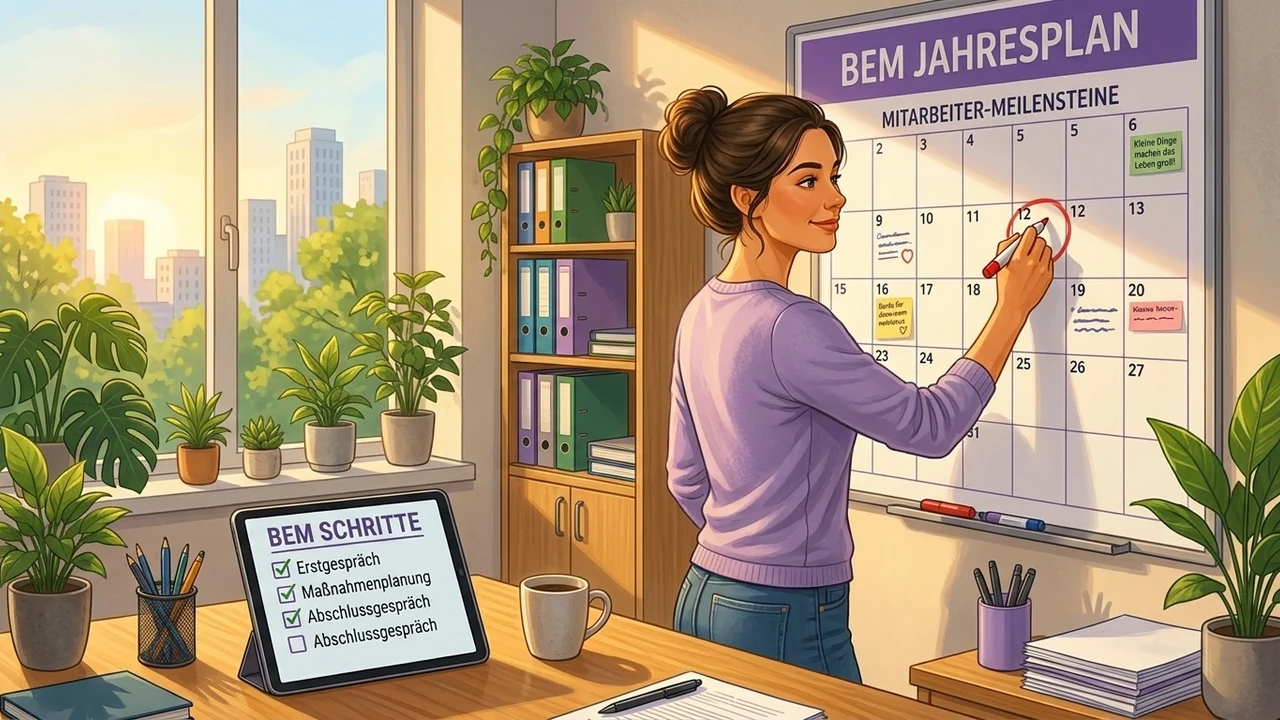
BEM 42-Day DeadlineBEM starting at 42 days: When exactly must the employer offer the meeting?After 42 cumulative sick days within 12 months, the employer must offer BEM (§167 SGB IX). How exactly is it counted? When is the deadline triggered? German Federal Labor Court ruling 7 AZR 698/14 explained. Note: This guide describes German employment law and may not apply outside Germany.

Contact During Sick LeaveMay and should I contact employees while they are on sick leave?No law prohibits contact during sick leave — but there are clear limits. What's allowed (organizational coordination, get-well wishes), what's risky (diagnosis questions, pressure to return), and when the BEM obligation applies.

Recovery Conversation vs. BEMRecovery Conversation, Return-to-Work Interview, or BEM: What's the Difference?BEM is mandatory starting at 42 sick days (Section 167 SGB IX); the return-to-work interview isn't legally regulated — and is often criticized as a control tool. The recovery conversation as a voluntary care offer: differentiation, pitfalls, co-determination.

BEM Process ExplainedHow Does BEM (Company Reintegration Management) Work — Step by Step?BEM under SGB IX Section 167: mandatory after 6 weeks of sick leave, 6-step process, common mistakes, and a sample invitation letter. Implement it legally compliant and employee-friendly.

BEM Invitation LetterBEM Invitation Letter: What Must It Legally Include?Legal basis, goals, voluntariness, data protection, contact person: the mandatory components of the BEM invitation under BAG 7 AZR 698/14 — plus common wording mistakes and a sample structure.

Conducting a BEM MeetingConducting a BEM meeting: How does it work and who takes part?Who takes part in the BEM meeting, how does it proceed, and what may not be asked? The circle of participants under §167 Abs. 2 SGB IX, the phases of the conversation, the diagnosis taboo, and documentation requirements.

Documenting a BEM Refusal the Right WayWhat do I need to do if an employee refuses the BEM meeting?BEM is voluntary (Section 167(2) SGB IX) — but the refusal must be documented without gaps. Which steps are now mandatory and how employers protect themselves.
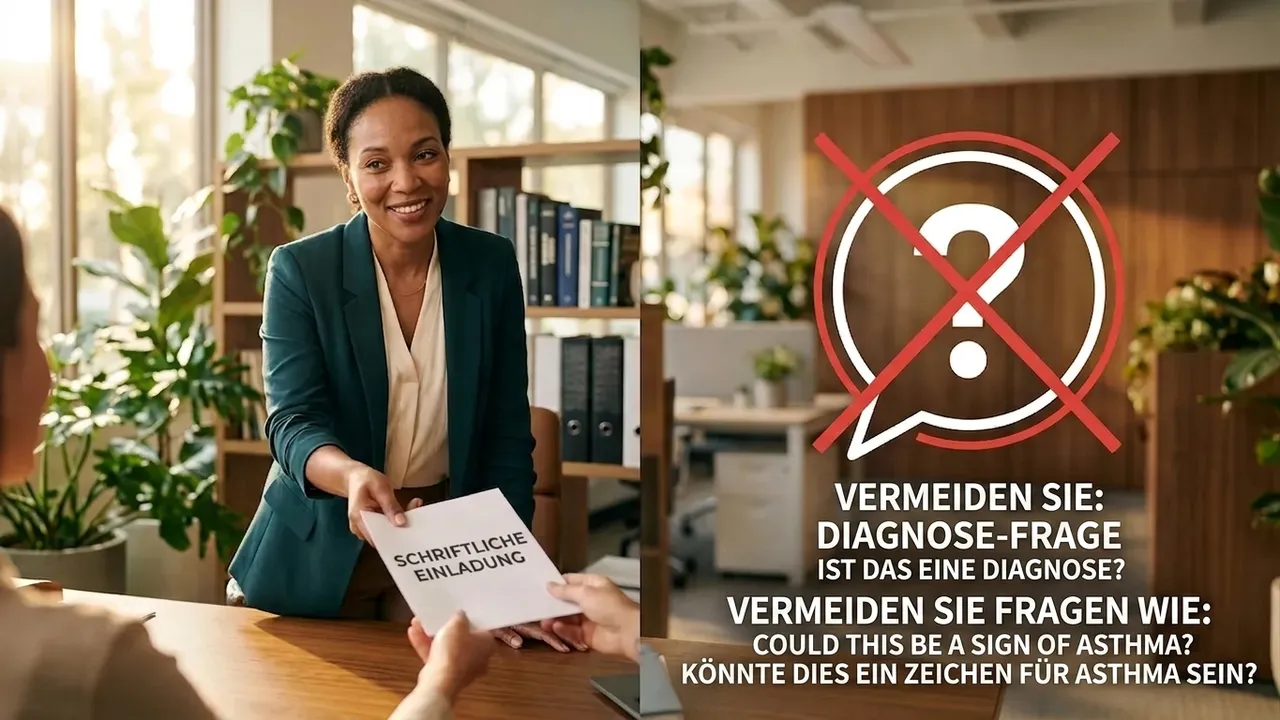
BEM Dos and Don'tsBEM Dos and Don'ts: What Are the Most Common Employer Mistakes in Return-to-Work Management?The most common BEM mistakes employers make: verbal invitations, diagnosis questions, BEM records kept in the personnel file, undocumented refusals. A do's-and-don'ts table based on §167 SGB IX and Federal Labor Court ruling 7 AZR 698/14.

BEM Legal Framework at a GlanceBEM Legal Framework: Which Regulations Apply and What Happens for Violations?Which laws govern BEM (workplace reintegration management)? Overview of §167(2) SGB IX as the core provision, the participants required by law, voluntary participation for employees, dismissal-protection consequences (BAG 7 AZR 698/14), and Art. 9 DSGVO.

BEM and Protection Against DismissalDismissal for illness without BEM: What does the employer really risk?Under BAG 7 AZR 698/14, dismissal without BEM is regularly disproportionate. What employers must demonstrate, which documents provide protection, and which mistakes make dismissals vulnerable to challenge.

BEM Records & Data ProtectionBEM Records and Data Protection: How Do You Manage BEM Data Legally?BEM data is health data under Art. 9 GDPR: consent as the legal basis, strict separation from the personnel file, a minimal access circle, retention limits. What belongs in the personnel file — and what doesn't.

Phased Return to Work (Hamburg Model)Phased return to work (Hamburg Model): How does it work within BEM?The Hamburg Model (Section 74 SGB V, Section 44 SGB IX) brings employees back gradually after a long illness. Medical step plan, sick pay/transitional benefits, the employer's role — and how it differs from BEM. Note: this article describes German law.

BEM in Small BusinessesBEM in Small Businesses: Does the Obligation Apply Even Without a Works Council or HR Department?The BEM obligation (Section 167(2) SGB IX) has no company-size threshold — it applies with 5 or 15 employees, without a works council, and without an HR department. Who handles it in practice, and what free support is available.
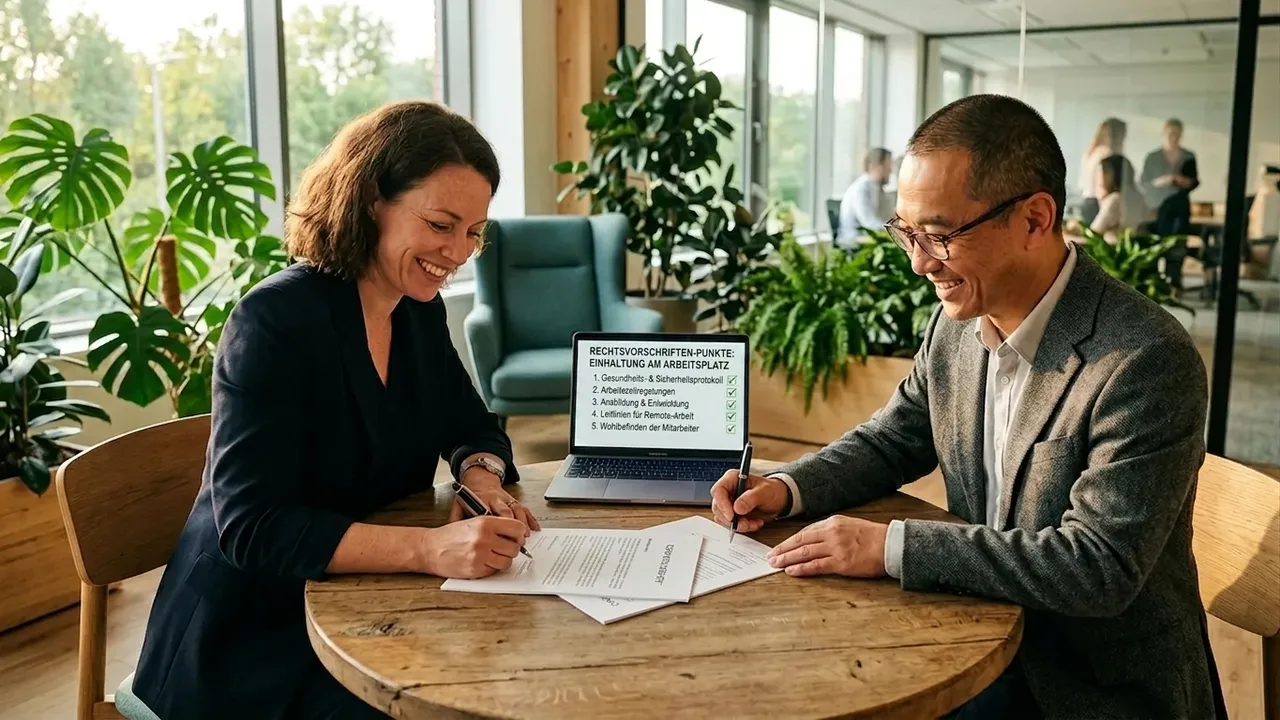
Works Agreement: Return InterviewsReturn-to-work interviews and works council co-determination: What belongs in the works agreement?Standardized return-to-work and recovery interviews can be subject to works council co-determination (Section 87 Works Constitution Act, Germany). The outline checklist for the works agreement: voluntariness, diagnosis ban, documentation, and distinction from BEM (workplace reintegration). Note: This guide describes German employment law and may not apply outside Germany.

Health Data & GDPRWhat health data is HR allowed to analyze — and what does GDPR prohibit?Permitted vs. prohibited data sources in workplace health management: statutory health insurer sick-leave reports yes, individual sick notes no. GDPR Art. 9, anonymized analysis, survey rules.
Put the knowledge into practice?
EasyBGM implements the BEM obligations from these guides directly — with documentation, deadline tracking and a legally sound case file in one software.